
Does sugar make you tired? The simple answer is yes, but the science behind it is far more complex. Sugar, while often seen as an instant source of energy, can actually leave you feeling drained, unfocused, and irritable. This paradox stems from the way sugar interacts with your blood sugar levels and mood, creating a rollercoaster effect that can sabotage your energy and productivity.
Did you know about: Low Glycemic Foods for Mood Stability?
When you consume sugary foods or refined carbs, your body experiences a rapid spike in blood sugar, giving you that temporary boost of energy. But this high is short-lived, as your insulin levels quickly work to bring your blood sugar back down, often leading to a crash. This sudden drop not only makes you feel tired but also negatively impacts your concentration and emotional well-being. The effects of processed sugar go beyond just physical fatigue—they can affect your mental clarity, focus, and even your mood stability.

Ever wonder why you feel irritable or sluggish after indulging in a sugary treat? That’s the sugar crash in action. The impact of sugar on concentration is one of its most detrimental effects, especially for those who need sustained mental energy throughout the day. Whether you’re a student preparing for exams, a professional working on deadlines, or a busy parent juggling multiple responsibilities, sugar-induced fatigue can make even the simplest tasks feel overwhelming.
But here’s the good news: you don’t have to fall victim to sugar’s energy-draining cycle. By incorporating low glycemic foods for mood, such as whole grains, vegetables, and legumes, you can stabilize your energy levels and maintain better focus throughout the day. These foods release energy slowly, helping you avoid the spikes and crashes associated with sugary and processed foods.
If you’re looking for a way to satisfy your sweet tooth without the adverse effects, consider switching to healthy sugar alternatives like honey, stevia, or coconut sugar. These options are not only better for your blood sugar levels but also provide additional nutrients that processed sugar lacks.
Understanding the food-mood connection is the first step toward reclaiming your energy and well-being. By making smarter food choices and reducing your intake of refined carbs, you can break free from sugar’s grip and enjoy sustained energy, better focus, and a more balanced mood. Ready to feel more energized and in control? Let’s dive deeper into the relationship between sugar, energy, and mood!
Sugar often gets a bad rap for its role in weight gain and chronic illnesses, but one of the most overlooked aspects is how it impacts your energy levels. Have you ever felt a sudden burst of energy after consuming something sweet, only to crash shortly after? The connection between sugar and tiredness is more complex than you might think. This article explores the relationship between sugar consumption and fatigue, focusing on blood sugar levels and mood, the effects of processed sugar, and how choosing the right foods can improve your energy and focus.
Blood Sugar Levels and Mood: The Critical Connection (Does Sugar Make You Tired?)
Your blood sugar levels play a key role in how you feel throughout the day. When you eat sugary foods or refined carbohydrates, your blood sugar spikes rapidly, giving you a quick burst of energy. However, this is usually followed by a sharp decline or “crash,” which leaves you feeling tired, irritable, and even anxious.
This cycle has a profound impact on your mood. High blood sugar can lead to feelings of euphoria and energy, while low blood sugar, often resulting from the crash, can leave you fatigued and moody. Stabilizing your blood sugar levels by choosing nutrient-dense foods can help maintain consistent energy and a more balanced mood throughout the day.
The Effects of Processed Sugar on Your Body and Mind
Processed sugar, commonly found in candies, sodas, and baked goods, wreaks havoc on your energy levels. Unlike complex carbohydrates, processed sugar lacks fiber and essential nutrients, which means it is digested quickly, leading to those infamous energy crashes.
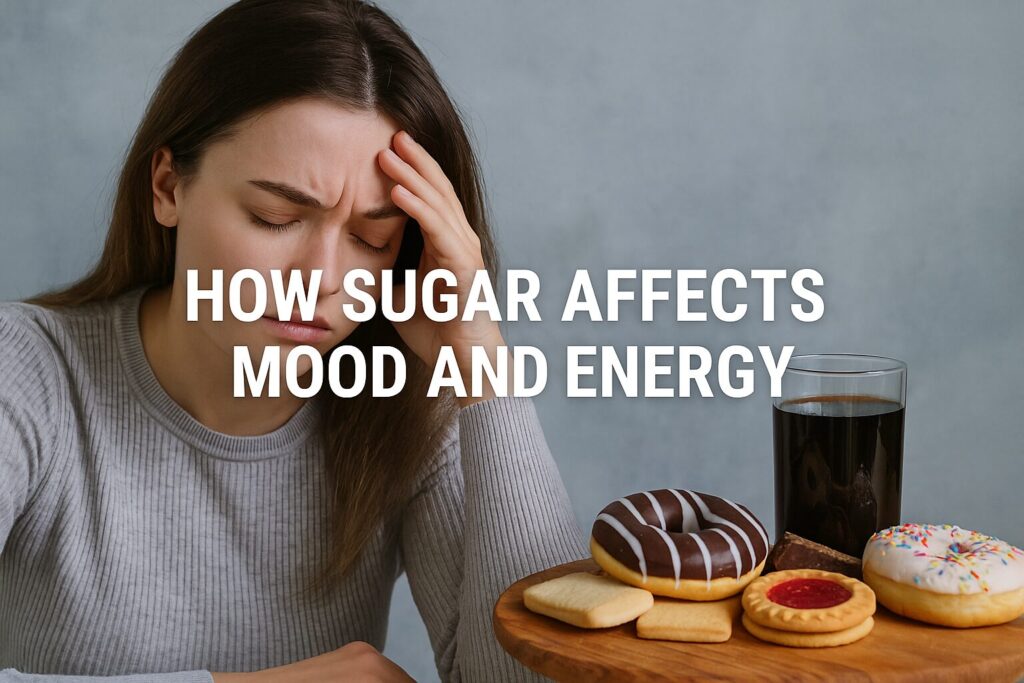
Here Is A Detail Of: How Sugar Affects Mood and Energy
The long-term effects of processed sugar are even more alarming. Regular consumption can disrupt your body’s insulin response, increase inflammation, and lead to chronic fatigue. For your mind, processed sugar is no friend either—it’s been linked to brain fog and reduced emotional resilience. By minimizing processed sugar, you can not only protect your physical health but also support better mental clarity and emotional stability.
Impact of Sugar on Concentration: A Hidden Cost
If you’ve ever struggled to stay focused after a sugary snack, you’ve experienced the impact of sugar on concentration firsthand. When your blood sugar spikes, your brain experiences a short-lived boost in energy. But as your levels drop, so does your ability to concentrate.
Frequent sugar crashes disrupt the brain’s ability to stay alert and process information. This can be particularly harmful for students, professionals, and anyone needing sustained mental performance. Opting for foods with complex carbohydrates and healthy fats can help maintain focus and prevent the mental fog associated with sugar crashes.
Low Glycemic Foods for Mood Stability
Low glycemic foods, which release energy slowly, are game-changers for both mood and energy levels. Unlike sugary snacks, these foods don’t cause rapid spikes and crashes in blood sugar. Instead, they provide a steady source of energy that helps maintain a balanced mood.
Examples of low glycemic foods for mood include:
- Whole grains like quinoa and brown rice
- Legumes such as lentils and chickpeas
- Fruits like apples and berries
- Vegetables such as spinach and broccoli
Incorporating low glycemic foods into your diet can help you avoid the emotional ups and downs associated with sugar consumption, providing a more stable and energized outlook on life.
Healthy Sugar Alternatives to Consider
Switching to healthy sugar alternatives is an effective way to reduce your sugar intake while still satisfying your sweet tooth. These alternatives are not only lower in glycemic index but also provide added nutrients that promote overall health.
Some popular options include:
- Stevia: A natural sweetener derived from the stevia plant, which has zero calories and a negligible impact on blood sugar levels.
- Honey: While still sugar, honey contains antioxidants and small amounts of vitamins.
- Maple Syrup: A nutrient-rich sweetener with minerals like manganese and zinc.
- Coconut Sugar: Lower in glycemic index than regular sugar and contains trace minerals.
By choosing these alternatives, you can enjoy sweetness without the adverse effects of refined sugar, making it easier to maintain consistent energy throughout the day.
Refined Carbs and Energy: A Dangerous Cycle
Refined carbs, such as white bread, pastries, and sugary cereals, act much like processed sugar in the body. These foods are stripped of fiber and nutrients, causing rapid spikes and crashes in blood sugar levels. This rollercoaster effect drains your energy, leaving you feeling sluggish and fatigued.
The key to breaking free from the energy-draining cycle of refined carbs and energy crashes is to replace them with whole, unprocessed foods. Opt for complex carbohydrates like sweet potatoes, whole-grain bread, and oats, which provide sustained energy and keep you feeling full longer.
The Food-Mood Connection: How Diet Shapes How You Feel
The food-mood connection is undeniable. What you eat has a direct impact on how you feel, both physically and emotionally. Diets high in sugar and refined carbs have been linked to increased rates of depression, anxiety, and mood swings. In contrast, diets rich in whole, nutrient-dense foods promote emotional stability and improved mental health.
Focusing on foods that support gut health, such as yogurt, fermented vegetables, and high-fiber options, can further enhance the food-mood connection. These foods support the production of serotonin, the “feel-good” hormone, helping to keep you both happy and energized.
Practical Tips to Reduce Sugar-Induced Fatigue
If you’re struggling with sugar-related tiredness, here are some actionable steps:
- Plan Balanced Meals: Ensure each meal includes protein, healthy fats, and fiber to stabilize blood sugar.
- Snack Smart: Choose low glycemic options like nuts, seeds, or a piece of fruit instead of sugary treats.
- Hydrate: Sometimes fatigue is linked to dehydration, so drink plenty of water throughout the day.
- Read Labels: Watch out for hidden sugars in processed foods and beverages.
- Introduce Healthy Substitutes: Use natural sweeteners like stevia or honey in place of refined sugar.
Conclusion: Understanding Sugar’s Impact on Energy
So, does sugar make you tired? The answer is yes—but only if you let it. By understanding the effects of sugar on your blood sugar levels, mood, and energy, you can take control of your diet and prevent the fatigue associated with sugary foods. Focusing on low glycemic foods, healthy sugar alternatives, and nutrient-dense meals can help you maintain consistent energy levels and improve both your physical and mental well-being.
The next time you reach for a sugary snack, think about how it will affect your energy and concentration. Instead, choose foods that nourish your body and mind, creating a sustainable path to better health and energy.



Pingback: How Sugar Affects Mood and Energy - fithut.in
Pingback: Low Glycemic Foods for Mood Stability: A Comprehensive Guide - fithut.in